
Can a Root Canal Be Fixed? Why Root Canals Fail & How to Save Them
The Direct Answer: Can a Failed Root Canal Be Saved?
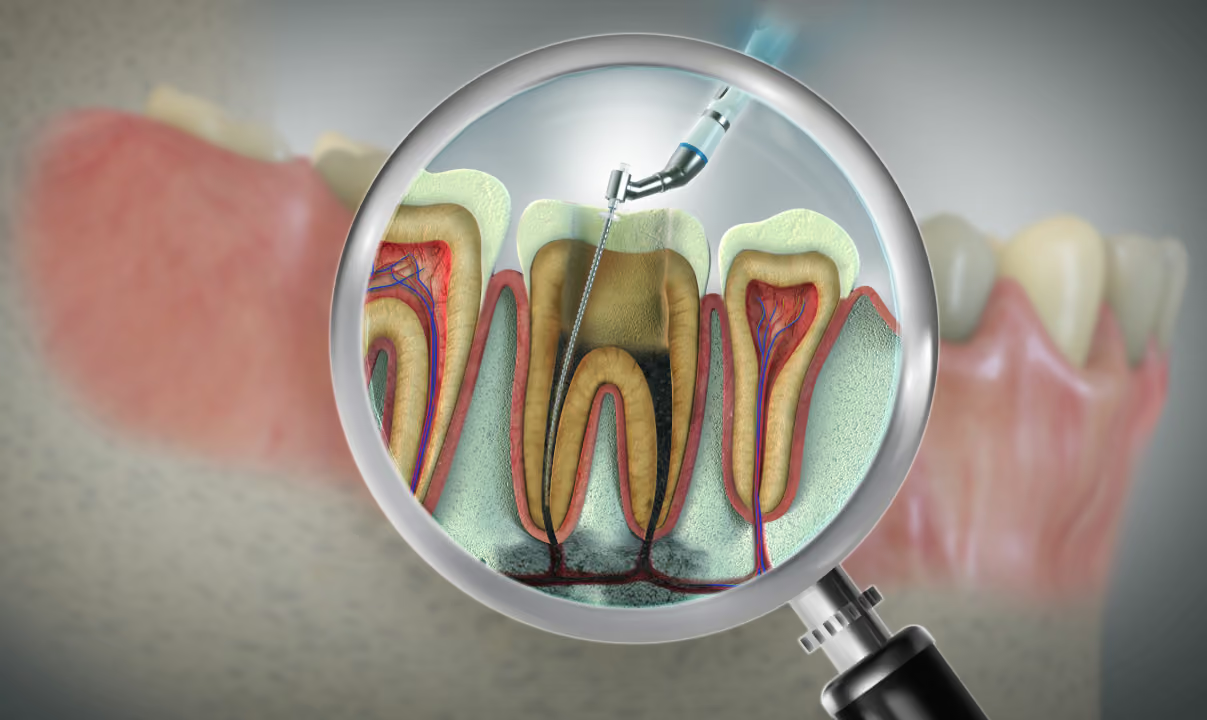
Yes, a previously treated root canal can often be saved through endodontic retreatment or an apicoectomy. These procedures address persistent infection, hidden canals, or new decay that may have compromised the original seal, helping restore the health of the tooth without extraction.
Why Do Root Canals Sometimes Fail?
Root canal therapy has a high success rate, but like any medical procedure, it’s not immune to complications.
Common Causes of Failure
- Undetected or unusually shaped canals
- Delayed placement of a permanent crown
- New decay exposing the treated area
- Cracks or fractures in the tooth
- Breakdown of the original restoration over time
When bacteria re-enter the inner structure of the tooth, infection can return—requiring specialized care to correct it.
Endodontic Retreatment: A Second Chance from the Inside
Endodontic retreatment involves reopening the tooth, removing the previous filling materials, and carefully cleaning and sealing the canals again.
This approach is ideal when:
- Infection persists inside the canal system
- The original treatment missed complex anatomy
- New contamination has occurred
Learn more about this procedure on our endodontic retreatment page.
Apicoectomy: Treating Infection at the Root Tip
In some cases, retreatment alone may not be enough. An apicoectomy is a minor surgical procedure that removes the tip of the tooth’s root along with any surrounding infected tissue.
This is often recommended when:
- Infection is located at the root tip
- Retreatment cannot fully resolve the issue
- There are structural limitations inside the canal
Explore this option on our apicoectomy service page.
The Specialist’s Advantage: Precision Tools That Make the Difference
Successful retreatment requires seeing what isn’t visible to the naked eye. That’s where an endodontic specialist makes a critical difference.
Dr. Ernest Reeh uses:
- High-powered dental microscopes to locate tiny, hidden canals
- 3D CBCT imaging to assess complex root structures and infections
- Advanced techniques to preserve as much natural tooth structure as possible
With over 30 years of experience and recognition as a Top Dentist in endodontics, Dr. Reeh brings a level of precision that significantly improves outcomes in complex cases.
You can meet Dr. Ernest Reeh to learn more about his expertise and patient-focused care.
A Conservative, Wellness-Based Approach to Saving Teeth
Choosing retreatment or apicoectomy is about more than fixing a problem—it’s about preserving your natural tooth whenever possible.
Compared to extraction, saving your tooth:
- Maintains natural function and bite alignment
- Avoids more complex procedures like implants
- Supports long-term oral health
This “second chance” approach aligns with a more conservative, wellness-focused philosophy of care.
When to Seek Evaluation for a Failed Root Canal
You may need retreatment or surgical care if you notice:
- Recurring pain or pressure in a previously treated tooth
- Swelling or tenderness in the gums
- A pimple-like bump near the tooth (possible abscess)
- Sensitivity that returns after initial relief
Early evaluation can prevent more serious complications and increase the likelihood of saving your tooth.
A Failed Root Canal Doesn’t Have to Mean a Lost Tooth
If you’ve been told your root canal has failed—or you suspect something isn’t right—there are still effective options available. River Valley Endodontics 2600 Wildpines Ln Stillwater, MN 55082 (651) 439-8085
Phone
Refer a Patient
