
CBCT 3D Imaging in Stillwater, MN
Three-Dimensional Diagnostics for Complex Cases
.avif)
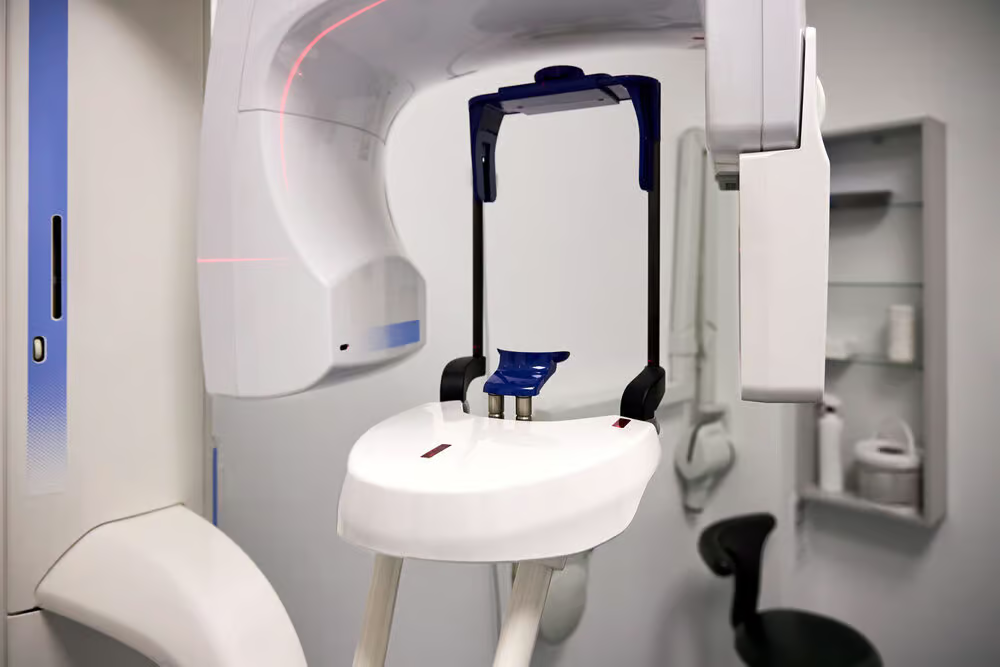
Cone beam computed tomography, or CBCT, produces a complete three-dimensional image of your teeth, roots, and surrounding bone. River Valley Endodontics uses CBCT imaging in Stillwater, MN to diagnose problems that standard two-dimensional X-rays cannot reveal, including hidden canals, small fractures, and infection at the root tip.
What Is CBCT Imaging?
CBCT uses a cone-shaped X-ray beam that rotates around your head, capturing hundreds of images that are reconstructed into a single three-dimensional view. Unlike a medical CT scan, dental CBCT is designed specifically for the head and jaw, uses significantly less radiation, and takes under a minute to complete. You remain seated and still throughout the scan.
When Is CBCT Imaging Used?
- Locating extra or unusually curved canals before root canal therapy
- Identifying infection or bone loss at the root tip that a standard X-ray may miss
- Detecting fractures that are not visible in two dimensions
- Planning dental implant placement with precise bone measurements
- Evaluating a previously treated tooth before endodontic retreatment
- Assessing the proximity of roots to the sinuses or nerve canals before surgery
CBCT imaging supports a range of procedures at our practice, including root canal therapy, endodontic retreatment, apicoectomy, and dental implant placement.
Is CBCT Imaging Safe?
Yes. Dental CBCT uses a fraction of the radiation of a medical CT scan and is comparable to a series of standard dental X-rays. The scan is only recommended when the additional detail will meaningfully improve diagnosis or treatment planning, and Dr. Reeh will explain why it is being used in your specific case.
What to Expect During Your Scan
The scan itself takes less than a minute. You will be seated with your chin resting on a support while the imaging arm rotates around your head. There is no discomfort, no injection, and nothing enters your mouth. Dr. Reeh reviews the images with you immediately afterward so you can see exactly what he sees.
Frequently Asked Questions
No. Dental CBCT is a different technology designed specifically for imaging the teeth and jaw. It uses a cone-shaped beam rather than the fan-shaped beam of a medical CT, delivers substantially less radiation, and produces images focused on a much smaller area.
A dental CBCT scan delivers considerably less radiation than a medical CT scan of the head. The exact amount depends on the size of the area being imaged. Dr. Reeh only recommends a CBCT scan when the additional diagnostic detail will meaningfully affect your treatment plan.
A standard X-ray captures the tooth from one angle, which means some fractures, extra canals, and pockets of infection can be hidden behind other structures. CBCT shows the tooth from every angle, which is why it is often used when a standard X-ray looks normal but symptoms continue.
The scan itself takes less than a minute. Including positioning and review of the images, you should expect the process to add roughly ten minutes to your appointment.
Coverage varies by plan. Some dental insurance policies cover CBCT when it is used for diagnostic purposes or surgical planning. Our team can help you understand your benefits before your appointment. Call (651) 439-8085 with questions about coverage.
No. There is no injection, nothing enters your mouth, and the machine does not touch you. You sit with your chin on a small support while the imaging arm rotates around your head.
Schedule an Evaluation
If your dentist has recommended an endodontic evaluation, or you are experiencing tooth pain that has not been diagnosed, CBCT imaging can often identify the cause quickly. Call (651) 439-8085 or request an appointment online to schedule with Dr. Reeh in Stillwater, MN.
Phone
Refer a Patient
